
A new era is dawning for FinTech.
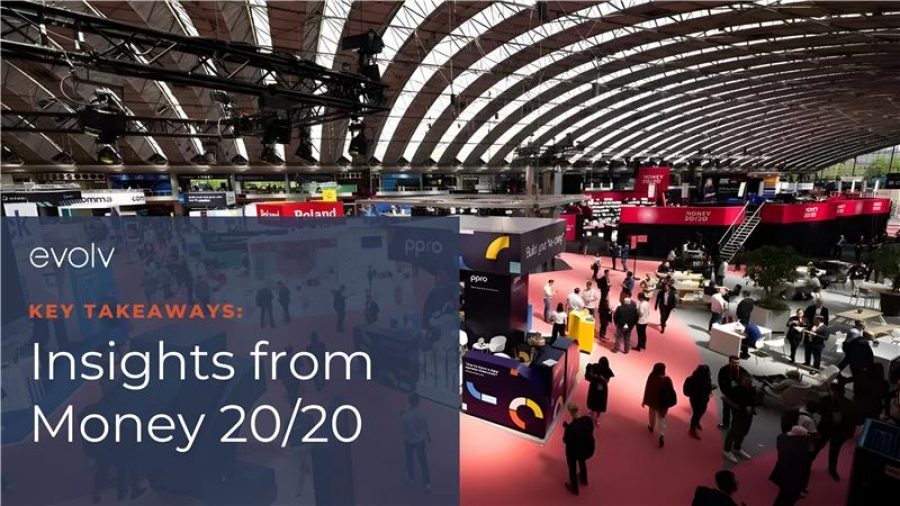
The annual Money 20/20 USA conference wrapped up in Las Vegas a few weeks ago, bringing together some of the most influential voices shaping the future of financial services. This year’s conversations – which included more than 630 speakers over 300 sessions — made clear FinTech is entering a new phase, defined by the accelerating convergence of digital assets, payments modernization, rising fraud complexity, and a continued surge in fintech innovation.
While banks and legacy financial institutions maintained notable visibility, the conference floor was overwhelmingly shaped by Fintech players positioning themselves as the innovators of the industry. Several evolv leaders attended this year’s conference, and we all walked away with the same thought: the themes emerging this year will meaningfully shape how organizations prepare for the future. Below are some key takeaways.
A New Payments Frontier

With new regulatory momentum, Fintech organizations are actively exploring the adoption of cryptocurrencies. Conversations across the conference pointed to stablecoins emerging as key player in the evolving payments economy. Stablecoins were consistently described as a bridge between digital assets and existing payment rails.
As consumer demand for instant, low-friction transactions grows, many sessions highlighted real-time conversion models as a viable path forward. These emerging payment efficiencies were noted for minimizing merchant risk and creating a more seamless checkout experience.
A standout example highlighted across sessions was PayPal’s introduction of “Pay with Crypto.” U.S. merchants can now accept over 100 cryptocurrencies, while PayPal seamlessly converts those assets into USD or its stablecoin, PYUSD. This approach offers substantially lower merchant fees compared to traditional payment methods and removes the complexity of crypto custody or price volatility.
Its broader significance is clear: more institutions may begin exploring their own stablecoin issuance to lower fees, modernize payments infrastructure, and diversify balance sheet assets. As U.S. debt levels rise and treasury yields fluctuate, stablecoins represent a compelling alternative.
Fraud, Identity, and Trust: A Rapidly Evolving Battleground

Another prominent theme was the heightened urgency around fraud prevention and digital trust. As emerging technologies like AI, real-time payments, and digital identity networks mature, fraud models are evolving faster than many existing defenses.
Sessions emphasized the need for more adaptive identity-verification systems and integrated governance frameworks. There is a growing concern around synthetic identities, deepfake-driven attacks, and increasingly automated fraud networks. As these threats grow more sophisticated, institutions are facing greater pressure to develop intelligent, behavior-driven detection capabilities that can keep pace with the rapidly evolving fraud landscape. Those organizations that find the right balance between security, compliance and a frictionless experience will win consumer loyalty in a digital first ecosystem.
Looking Ahead
The conversations at Money20/20 underscored an industry at an inflection point. Crypto and stablecoins are rapidly moving toward practical, mainstream use cases. Fintech continues to set the pace for innovation and customer experience. Fraud and identity challenges are evolving faster than many institutions’ current defenses.
As financial services organizations plan for 2026 and beyond, several themes emerged that will shape the next wave of transformation:
- Data-powered decisioning will remain central as firms seek to balance innovation, compliance, and customer trust.
- Ecosystem connectivity will grow in importance, with institutions increasingly recognizing the value of aligning with partners that strengthen their data foundations, enhance fraud resilience, or accelerate modernization.
- Thought leadership and early positioning will be essential as emerging technologies move from experimental to operational. Firms that signal clarity of vision and engage early in shaping dialogue will be better positioned to influence the industry conversation.
While Money 20/20 offered no shortage of near-term insights, it also illuminated a broader trajectory. Organizations that combine disciplined risk management with bold modernization strategies are the ones most likely to lead the next chapter of financial services.

Melissa Platt is a transformation and change enablement consultant specializing in blending organizational design, change enablement and strategic execution. With experience across financial services, healthcare, and retail pharmacy, Melissa partners with executives to align teams around a clear vision and drive measurable outcomes. She brings a structured yet human-centered approach to navigating ambiguity and enabling adoption. Melissa is passionate about helping organizations modernize, scale, and sustain meaningful change.